Tag: focus

  • Why You Should Stop Paying Attention To The Focal Point Of Your Images

    Why You Should Stop Paying Attention To The Focal Point Of Your Images

    Sunset Photography_Wasim Muklashy Photography

    I recently found myself standing in front of a stunning vista in the Santa Monica Mountains. It was June 21, 2014. The Summer Solstice. And the sun was just about to set behind the mountains, leaving a beautiful show of colors and clouds and reflections and highlights and vivid shadows in it’s wake. There was another group of photographers at the other end of the overlook and they were doing what most photographers first instinct is to do…pay full attention to the focal point of their image, the subject they wish to draw attention to, and everything else came secondary.

    In this case, the focal point was the sun.

    The images they got weren’t bad, they were wonderful images of the sun over the mountain range, but, well, that’s exactly the image that most people would expect to see, meaning, in essence, they weren’t very unique for the situation. For months, I’ve been tackling how to avoid this sort of image and so far my conclusion is, well, to avoid the focal point and subject of my image and, somehow, find a way to make that secondary.

    Make the sun secondary during a sunset shot? Huh? Let me explain.

    When I saw that group of photographers standing in a row next to each other, I couldn’t help but distance myself as far from them as possible. As a matter of fact, I went to the complete opposite end of the overlook. That was the first thing I did that I knew would differentiate my image from theirs, for better or for worse. The next thing I did was drop from eye level and look for a foreground subject. As soon as I dropped to ground level, I ran across a sagebush and it was impossible to ignore the highlights bouncing off the tops of the drying buds. They were stunning and I knew immediately this had to be incorporated into the image. This is an aspect of my final image that I would have completely missed had I joined the other photographers, an aspect that all of those standing eye level at the other end of the overlook had no idea even existed.

    I’m not in any way claiming my image was better, or more original than theirs, nor am I claiming that I have any sort of secret to making good images. That’s obviously in the eye of the beholder. All I’m claiming is that by simple physics, the fact that I consciously chose a different vantage point, made my image at least different than the other photographers there. And I personally liked what I came away with. And that’s at least a good first step towards a goal of finding uniqueness amongst a saturated photographer world out there.

    Had I joined the group, yes, no doubt I would have ended up with a very nice Summer Solstice sunset image, it would have been hard not to in that location at that time. But would I have ended up with this one? One I’m MUCH happier with? No. I wouldn’t have. The interplay between the sun setting behind the hills, and the highlights of that final light of the day bouncing off the tips of the sagebrush adding a sense of scale and depth that otherwise would have been missing, are what I feel helps this image stand apart from just focusing on the sunset itself.

    So the point here is basically to not settle for the obvious. You know that option is there, so you can always return to it if all else fails, but don’t be sedentary. Duck and dodge and move and try different things. Try to focus first on finding a foreground or an element that would normally be overlooked – the bark of a tree, the petals of a flower, the dust being kicked up by the wind – whatever other elements exist, are all parts of that landscape, and can all help in adding another dimension to what the main focus of the image was originally supposed to be.

    In other words…play!

    The image above was taken with a Samsung NX30 and a Samsung 18-200mm lens.

    For more of my madness:
    Instagram: @wasimofnazareth
    Twitter: @wasimofnazareth
    Google+: www.Google.com/+WasimMuklashy
    Facebook: www.Facebook.com/WasimOfNazareth

  • Why I Switched To Back Button Focus And Haven’t Looked Back

    Why I Switched To Back Button Focus And Haven’t Looked Back

    SAMSUNG CSC

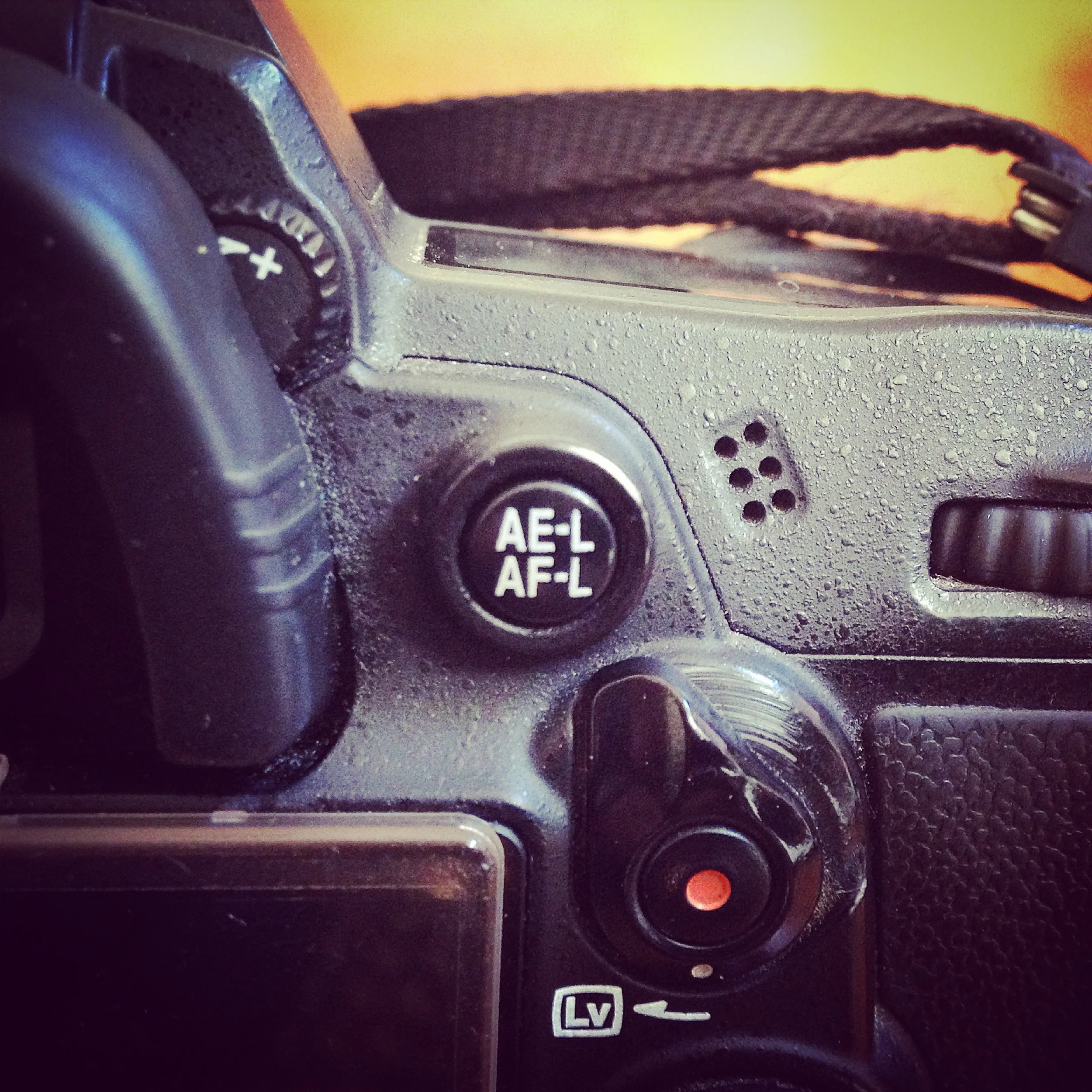
    It didn’t make sense at first. Use the AE button on the back of the camera for focusing? How is that supposed to be easier and/or better than the traditional method of pressing the shutter halfway down? I mean, that’s what I know, that’s what I’ve grown to know, that’s what’s normal! Is this an elitist purist thing? Or is this real?
    About a year ago, I decided to truly dig deeper into the idea behind back button focus and, well, like a classic case of neuro-plasticity, over the next 90 days, I had inadvertently rewired my brain to wonder the exact opposite of what I was wondering when I started this little experiment…how did I go this long without it?

    The idea is this: Back button focusing basically frees up the shutter button to be, well, a shutter button. Once you wrap your head around that novel idea, the fun part begins. This is the stage when your brain begins the process of peeling the two functions apart from synonymity, realizing that once you have separate control of focusing and firing the shutter, everything becomes clearer (pun intended…sort of).

    BackButton_AEL_Nikon D7000

    When you’re using the shutter halfway down method of focusing, each time you move the camera, you have to refocus on your focal point. Unless you’re able to be steady enough to keep that shutter halfway down without clicking the shutter, sometimes for several minutes at a time, this can become a bit tedious as your brain keeps focusing and firing the shutter as a single married entity. But, once you realize they’re a horrible couple and you break them up and see how silly it was that they ever got together to begin with, your brain begins to understand that it should be able to focus on the task of focusing, and then, turn all its energy to the composition of the shot itself.

    In other words, once you focus, as long as you stay in that position, you won’t have to focus again. You can expend all your energies on the composition of the shot with the peace of mind that your shots will be sharp from simply setting that focus once, rather than having to refocus with each shot, each press of the shutter.

    Essentially, the photographic process goes from:

    compose, focus, shoot, re-compose, re-focus, shoot, re-compose again, re-focus again, shoot.

    to, simply:

    focus, compose, shoot, compose, shoot, compose, shoot.

    My brain already hurts less just thinking about it.

    Just imagine the decrease in brain strain when shooting at events and weddings and wildlife knowing that your shots are in focus by just having to focus once instead of with each shot! All because once you release the back button, so long as you remain the same distance away from your subject(s), you can re-compose to your heart’s content confident that focus will remain on that plane of field. The amount of ‘keepers’ is bound to drastically increase!

    Additionally, this works really well on moving objects such as sports or wildlife. For example, let’s say a car was coming towards you, you can focus on the part of the car you want, hold down the back button for focusing, keep it held down and aimed at your chosen focal point, and that point will continually stay in focus. You can then independently fire the shutter while your finger is still holding down the focus button so all of your attention is aimed at the focal point and nothing else, ensuring with better accuracy that you’ll get the sharp focal point you want. Conversely, with traditional shutter-halfway-down focusing, once you press down on that shutter, any movement in those milliseconds between auto-focus disengaging and the shutter firing, especially when working with fast moving subjects, and you’ll have less of a chance of getting a sharp shot. Once you use it and get used to it, there is no turning back.

    Anyhow, most DSLRs and newer mirrorless cameras offer the option – it would be in your settings menus. In most Canon DSLRs, look for the “Metering Start / Meter + AF Start” option in the “Shutter/AE Lock Button” menu. In most Nikon DSLRs, first navigate to the “Custom Settings Menu,” choose “Controls,” then “Assign AE-L/AF-L Button”, then “AF-On.” Now, in the “Custom Settings Menu,” choose “Autofocus,” then in both “AF-C priority Selection” and “AF-S Priority Selection,” choose “Release” so that the shutter will still fire even if if it thinks you didn’t focus because the shutter button wasn’t pressed halfway.

    If you have a different kind of camera, Just Google your camera make and model with ‘back button focus’ and you should be off and running.

    For more of my madness:
    Instagram: @wasimofnazareth
    Twitter: @wasimofnazareth
    Google+: www.Google.com/+WasimMuklashy
    Facebook: www.Facebook.com/WasimOfNazareth